Your Journey to Lasting Weight-Loss Starts Here.
Losing weight can be a difficult journey. You may have tried various diets, exercise programs, and even medications with limited success or lasting results. We can help you determine if weight-loss surgery is right for you.
The Surgical Weight-Loss Program at MemorialCare Orange Coast Medical Center specializes in helping patients achieve sustainable weight loss through advanced bariatric surgery. Our multidisciplinary team includes board-certified surgeons, dietitians, psychologists, and nurses who provide expert care and support at every step—from initial consultation through long-term wellness.
Key Benefits of Our Surgical Weight-Loss Program:
- Experienced, board-certified surgeons specializing in bariatric procedures. More than 12,500 surgeries have been performed since the program's inception.
- Personalized care plans tailored to your health goals
- Minimally invasive techniques for faster recovery
- Reduction of obesity-related health problems such as type 2 diabetes, heart disease, and high blood pressure
- Comprehensive pre- and post-operative support, including long-term follow-up care
- Ongoing nutrition counseling and access to support groups
Surgical Procedures:
- Gastric Sleeve Surgery: Reduce stomach size to promote natural weight loss
- Gastric Bypass Surgery: Reduce stomach size and re-route the digestive system to maximize weight reduction
- Revision Weight-Loss Surgery: Correct or enhance previous bariatric procedures
- Lap-Band Removal Surgery: Safely remove a band with expert care
We are an Accredited Metabolic and Bariatric Surgical Center, recognized by the American College of Surgeons and the American Society for Metabolic and Bariatric Surgery. Demonstrating an uncompromised commitment to quality, we have earned the confidence, respect, and trust of patients who are making a lifetime commitment to living a healthier life.
Weight-Loss Surgery Assessment
Your Personalized Weight-Loss Journey
At MemorialCare, we believe in holistic care and long-term support. From first call to follow-up, we’re with you every step of the way. The Surgical Weight-Loss team will work with you to determine the best treatment plan. We will guide you throughout, providing expert care, education, and support to help you achieve lasting health and wellness.
If you are considering weight-loss surgery and are interested in learning more, we suggest you begin here:
- Take our Weight-Loss Surgery Assessment. This quick 5-minute survey will help determine whether you are a candidate for surgery.
- Request a Consultation. A member of our team will contact you to answer questions, explain the program, and connect you with a physician for your initial appointment. You may also call us at 714-378-7622.
- Attend one of our Surgical Weight-Loss Support Groups. These meetings are for both patients considering weight-loss surgery and those who have already undergone surgical intervention.
- Meet with a bariatric physician to determine your eligibility: You’ll review your medical history, previous weight-loss efforts, and discuss your readiness for permanent lifestyle changes. Key factors in selecting the right procedure include:
- Baseline BMI
- Comorbidities, nutritional risks, prior surgeries or reflux/GERD
- Long-term sustainability
Please Note: Depending on your insurance, you may need a referral from your PCP before seeing a bariatric physician.
- Overview: Your navigator will guide you through the eligibility criteria, explain insurance requirements, and answer any questions you may have.
- Meet Your Team: You’ll be introduced to a multidisciplinary team including nurse navigators, nutritionists, and psychologists.
- New Patient Class: MemorialCare offers an overview class to help you understand the surgical journey, expectations, and available procedures.
- Insurance & Scheduling: Coordinators assist with insurance approvals and scheduling your procedure.
- Comprehensive Health Evaluation: Includes lab tests, cardiac, sleep assessments, and other screenings to ensure you’re ready for surgery.
- Psychological Assessment: Ensures you’re mentally prepared and equipped for this life change.
- Nutrition Counseling: You’ll work with a dietitian to learn about pre-surgery diets, portion control, and healthy eating habits through in-depth classes and resources.
- Lifestyle Guidance: You’ll receive advice on physical activity, stress management, and strategies to address emotional eating.
- Minimally Invasive Techniques: Most procedures (gastric sleeve, gastric bypass) are performed laparoscopically, reducing pain and recovery time.
- Expert Surgeons: MemorialCare’s accredited program features highly skilled surgeons with extensive experience in thousands of successful procedures.
- Hospital Experience: You’ll be cared for in a state-of-the-art facility, with a dedicated nurse navigator to support you during your stay. On average, one's hospital stay is 1-2 days.
- Post-Operative Education: You’ll receive instructions on wound care, activity restrictions, and signs of complications.
- Follow-up Care: Regular appointments are scheduled to monitor your progress, adjust medications as needed, and address any concerns.
- Support Groups & Counseling: Ongoing access to support groups and psychological counseling to help you adapt to new habits and overcome challenges.
- Nutrition & Activity: Continued guidance from dietitians and physical therapists to help you maintain healthy routines. A post-surgery diet progresses in phases, from liquids to pureed to soft foods to regular foods. Vitamin and mineral supplements are often required. Physical activity is ramped up. Learn about post-operative gastric bypass and sleeve nutrition.
- Ongoing Wellness: To ensure lasting success on your wellness journey, MemorialCare encourages lifelong follow-up that includes annual visits, nutrition education, and support to help you maintain results and prevent weight regain.
- Weight-Loss Medications: If needed, use of adjuncts (GLP-1) may be prescribed.
- Quality of Life: Many patients report improved health, increased energy, and a better ability to enjoy life and activities with loved ones.
Hear From Our Patients Who Have Undergone Weight-Loss Surgery
Every year, MemorialCare Orange Coast Medical Center's Weight-Loss Surgery Program helps hundreds of patients lose weight and achieve a healthier lifestyle. Watch our videos as our patients share a glimpse into their personal journeys and how surgical weight loss improved their lives.

After a lifetime of struggling with her weight, Alexis lost over 100 pounds and discovered a passion for fitness following weight loss surgery with Dr. Atif Iqbal.

Greg lost 80 pounds after undergoing gastric bypass surgery with Dr. Michael Russo. Thanks to his weight loss, Greg now takes six fewer medications each day.

A chronic stress eater, Vergel lost 155 pounds after undergoing gastric bypass surgery with Dr. Mir Ali. As a result, his blood pressure is now normal, and he no longer needs a CPAP machine.

Following gastric bypass surgery, Cari lost 160 pounds and now enjoys an active, healthy lifestyle. She credits the dedicated team at Orange Coast Medical Center for supporting her remarkable transformation.

When his young son told him he was fat, Ray knew he needed to do something. After weight loss surgery, he not only lost 110 pounds, but also began jogging daily.

After a challenging day at a theme park with her grandson, Renee decided to pursue weight loss surgery. Now, 157 pounds lighter, she enjoys walking that same theme park without the assistance of an electric cart.
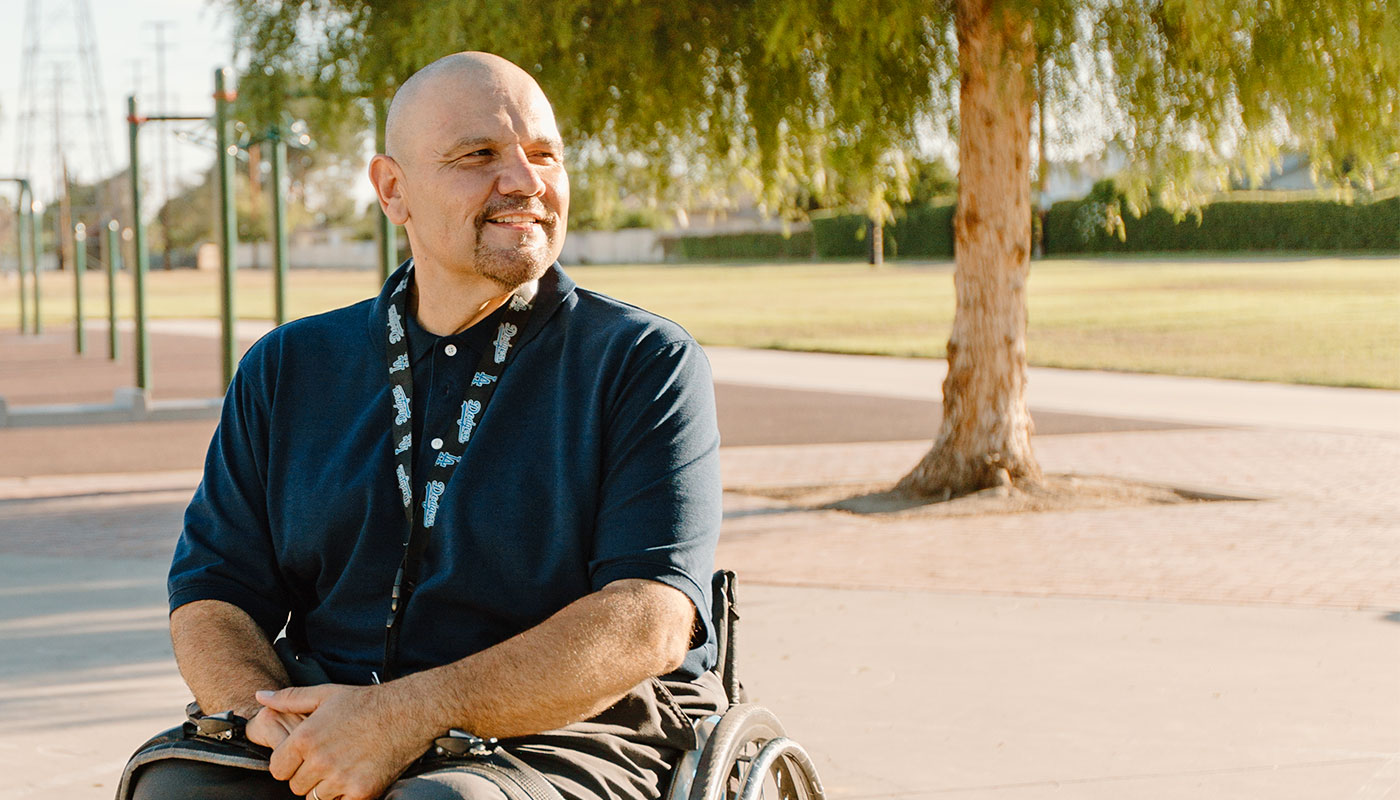
Victor's health has improved significantly since undergoing weight loss surgery, resulting in a 135-pound weight loss. In a wheelchair, he is now able to play catch with his grandson and transfer much more easily from his wheelchair to his bed, shower, and other areas.







Your Partners in Weight-Loss Surgery
When you choose Orange Coast Medical Center’s comprehensive Surgical Weight-Loss Program, you'll be in the hands of an expert multidisciplinary team that work together to support you throughout your journey. Your care team includes:
- Navigators: Personalized navigators guide each patient through the process, review eligibility, and assist with insurance requirements. Additionally, nurse navigators assist and answer questions throughout hospitalization and after surgery.
- Surgical Specialists: A bariatric surgeon will handle your main surgery and any related gastrointestinal procedures, such as hernia repair. If you require cosmetic surgery after recovery (such as skin removal or a tummy tuck), this will be performed by either your bariatric surgeon or a plastic surgeon.
- Psychologists: Each patient undergoes a psychological assessment to ensure they are mentally prepared and equipped for this life change.
- Dietitians: Patients have access to nutritional education and receive support for optimal health benefits.
- Support Groups: Weekly support group sessions are available before and after surgery.
GLP-1 Medications and Weight Management
Today, healthcare news is filled with stories about “miracle” GLP-1 weight-loss medications, such as Wegovy and Ozempic. While these medications have demonstrated significant success, questions remain about their long-term effectiveness. For many patients, weight can return over time, especially if they stop taking the medications.
In contrast, the history of bariatric surgery has shown that it remains the most effective option for achieving long-term and permanent weight loss success. At MemorialCare, we are proud of the positive impact our Weight-Loss Surgery Program has had on the lives and health of many individuals.
If you have taken or are currently taking GLP-1 medications but are looking for a more effective and permanent weight loss solution, our bariatric surgeons are here to discuss surgical weight loss options with you.
For more information, visit: Choose the Right Path For You: Comparing Surgery vs. Weight-Loss Medications
Frequently Asked Questions About Weight-Loss Surgery
Obesity is generally defined as excessive weight due to the accumulation of fat, above 20 percent of an individual’s ideal body weight based on age, gender and height. An individual is considered morbidly obese when he or she weighs 75 pounds or more above the ideal weight, with a Body Mass Index (BMI) of 40 or greater. A BMI of 35 or greater is considered severe obesity. Generally, a person must be about 75 pounds overweight to be severely obese. The BMI is calculated by dividing an individual’s weight in kilograms by the square of his/her height in meters.
Severe obesity is not solely a cosmetic problem. Medical science has clearly identified it as a critical health concern. According to the National Institutes of Health, obesity is the second-leading cause of preventable death in the United States. Statistics demonstrate that the life expectancy of a severely overweight person is dramatically shorter than that of an individual who is at a normal weight. Additionally, there are risks of developing heart disease, high blood pressure, diabetes, orthopedic problems and depression associated with severe obesity.
The concept of surgery to control obesity grew out of the results of operations for cancer or severe ulcers that removed large portions of the stomach or small intestine. Because patients undergoing these procedures tended to lose weight after surgery, some physicians began to use such operations to treat severe obesity. The first operation that was widely used for severe obesity was the intestinal bypass.
This operation, first used more than 40 years ago, produced weight loss by causing a condition known as “malabsorption” (the failure of the intestines to properly absorb nutrients from food). The idea was that patients could eat large amounts of food, which would be poorly digested or passed along too fast for the body to absorb many calories. Although this surgery is no longer used in its original form, surgeons now employ modified techniques that achieve weight loss by limiting the stomach's capacity to hold food. These restrictive procedures are often combined with modified malabsorptive procedures that limit calorie and nutrient absorption, potentially leading to altered food choices.
Two ways that surgical procedures promote weight loss are:
- By decreasing food intake (restriction). Gastric banding, gastric bypass, and vertical-banded gastroplasty are surgeries that limit the amount of food the stomach can hold by closing off part of the stomach. These operations also delay the emptying of the stomach.
- By causing food to be poorly digested and absorbed (malabsorption). In the gastric bypass procedure, a surgeon creates a direct connection from the stomach to a lower segment of the small intestine, bypassing the duodenum (the first part of the small intestine) and a portion of the jejunum (the second segment of the small intestine).
Each procedure is designed to limit the amount of food that can be eaten during a meal by reducing the stomach's capacity. With a smaller stomach, you will feel full more quickly and for a longer period, eliminating the need to eat larger quantities at more frequent intervals. A lower intake of calories will satisfy your appetite and help you lose weight at the same time.
Although there may be some exceptions depending on each individual, the following criteria must be met before a candidate is accepted for a surgical weight-loss procedure:
- Demonstrated previous efforts at weight loss that include mainstream dieting (no “fad” diets) and/or exercise programs.
- Willingness to make necessary changes in eating habits and a demonstrated motivation toward weight loss.
- Absence of medical problems that would make surgery/anesthesia hazardous.
- Usually between the ages of 18 and 70. Patients are accepted on a case-by-case basis if they are younger or older than this range.
- At least 75 pounds over the recommended weight for your age, height, and gender, or have a Body Mass Index (BMI) of 40 or greater, or 35 or greater, with certain co-morbidities, such as hypertension, diabetes, or sleep apnea.
For those who remain severely overweight when non–surgical approaches to weight loss have failed, or for people who have obesity–related diseases, surgery may be the next step. Answers to the following questions can help in your decision to undergo weight-loss surgery.
Are you:
- Unlikely to lose weight successfully with (further) non–surgical measures?
- Well informed about the surgical procedure and the effects of treatment?
- Determined to lose weight and improve your health?
- Aware of how your life may change after the operation (adjustment to the side effects of the surgery, including the need to chew well and the inability to eat large meals)?
- Aware of the potential for serious complications, the associated dietary restrictions and the occasional failures that are associated with surgical weight-loss procedures?
Do you:
- Have a BMI of 40 or above, or 35 or above with co-morbidities?
- Have an obesity–related physical problem, such as body size, that interferes with employment, walking, or family function?
- Have high–risk, obesity–related health problems such as diabetes, severe sleep apnea, or obesity–related heart disease?
Though surgery may be a viable option for you, success is only possible with your fullest cooperation and commitment to behavioral change and medical follow–up for the rest of your life.
With the altered size of your stomach and by eating only the amount of food recommended in your diet, your daily food intake will be decreased. With this decrease will come a weight loss of as much as five to six pounds per week for the first six weeks after gastric bypass surgery. Weight loss is usually slower with the adjustable gastric band, but it may have similar results a few years after the procedure. With both procedures, you can continue to lose weight at a rate of one to two pounds per week for several months. The rate at which you will lose weight will decrease gradually until you reach a stable and healthy weight. Additional weight can be lost with a concentrated effort, including incorporating exercise into your daily life.
In addition to looking better, weight loss improves most obesity–related conditions, including diabetes, sleep apnea, joint problems and hypertension. Many patients find that they can reduce the number of medications they need to take, or even eliminate them altogether. Many patients also report a greater feeling of personal development and job potential as a result of their renewed sense of self–esteem.
Several factors contribute to weight loss. Among the most important are your age, gender and initial weight at the time of your operation. Your willingness to make the necessary adjustments in your present habits is essential to the ultimate success of the procedure.
Any surgery entails a certain amount of risk, and complications cannot always be avoided. Therefore, before making the decision to undergo surgery, it is important to consider all the potential risks. Your surgeon will explain the risks associated with each procedure to you. Some of the potential complications are listed below:
Immediate Risks
- An obese person has a higher risk of complications from anesthesia than a non–obese person. An anesthesiologist will most likely want to meet with you prior to surgery to discuss possible complications.
Risks During Surgery
- Possible bleeding.
- Pulmonary embolism, or blood clots in the lungs. Prevention of this occurrence is achieved through the administration of certain medications that inhibit blood clotting.
- Pulmonary atelectasis, or the partial collapse of one or more segments of the lungs, may occur and can develop into pneumonia if left untreated.
Delayed Complications
- Wound infection
- Staple line disruption leakage
- Vomiting
- Abdominal abscess
- Small bowel obstruction
- Weight loss failure
It is worth noting that the above-listed complications are rare. However, if they do occur, a revision operation may be necessary. Other unforeseen complications, including death, are a possibility. Bariatric surgeries are not miracle procedures or an “easy way out.” It is possible to “eat through” the operation and fail to lose/regain weight at a later time.
Proper nutrition and exercise are essential to a successful weight-loss program. Following surgery, a dietitian will teach you how to eat properly and create a personalized nutrition plan for you. In addition, any form of moderate exercise will help you lose weight faster, help you maintain your muscle mass and generally make you feel better.
A healthy level of exercise is important to your daily life pattern. After the first visit following your procedure, we encourage you to resume activities and begin exercises that you find enjoyable. Once you begin to lose weight, you will find that you have more energy than you did before the procedure and exercising will become more pleasurable.
Like nutrition and exercise, a supportive network is important to the weight-loss effort. The team at the MemorialCare Surgical Weight-Loss Center includes not just our skilled surgeons, but also internists, psychologists, counselors and dietitians to help you develop a program to achieve your weight-loss goal. Additionally, there are support groups for individuals who have undergone surgical weight loss, and patients are automatically connected to this network. This network features a supportive group environment and regular meetings, with guest speakers who discuss topics directly related to the daily issues you will face as you progress with your weight loss.
Many insurance companies do cover these procedures. Insurance providers understand that severe obesity can contribute to multiple health problems. The knowledgeable staff at the MemorialCare Surgical Weight-Loss Center will work with you and your insurance provider to help make the necessary financial arrangements.
Significant weight loss can potentially reverse or prevent Type 2 diabetes, lower the chance of developing cancer, reduce joint pain, reverse upper-digestive issues, as well as prevent other life-threatening conditions. Socially and psychologically, the benefits are extensive. As people lose weight, they become more active and gain self-esteem.
Weight-loss surgeries can improve diabetes, sleep apnea, hypertension, cardiovascular disease and other comorbidities. Surgically altering the gastrointestinal tract causes changes in the incretin system – a group of hormones that regulate glucose. Insulin levels often return to normal just a few days after surgery, before any significant weight loss occurs.
Obesity contributes to osteoarthritis, a form of common wear-and-tear arthritis, by placing additional stress on weight-bearing joints. Every pound of excess weight adds one-and-a-half pounds of force to the knees. A sustained 10- to 15-pound weight loss in young obese people can mean a much lower risk of osteoarthritis later in life.
Body fat leads to an increase in blood volume. The heart works harder, which causes harmful changes in its structure and function over the years. Additionally, fat tissue – particularly in the abdomen – produces toxic and inflammatory substances that can damage the heart muscle.
Weight-loss medications can help some individuals achieve their target weight, but for many, these drugs are not a complete solution. Research shows that approximately two-thirds of people who start weight-loss medications stop using them within the first year, often due to factors such as cost, side effects, or a plateau in weight loss. For those who find it difficult to maintain weight loss with medication alone, bariatric surgery may provide a more sustainable, long-term option.
Locations Offering Weight-Loss Surgery
Resources
Providers
Find a Provider Near You
Located throughout Orange County and Los Angeles County, MemorialCare-affiliated physicians are locally and nationally recognized in their area of expertise. We've made it easy to find a quality healthcare provider right in your own backyard.
