Published on April 11, 2025
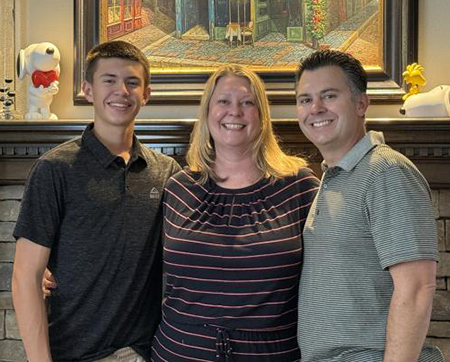
For Jason Lynn, a lifelong Orange County resident, heart disease was something he never thought he would have to face. At 47, he considered himself relatively fit, walking three to four miles a day and doing occasional weight training.
Jason’s healthcare journey began when he experienced chest tightness and an irregular heartbeat. His Apple Watch detected an abnormal rhythm, prompting him to visit the ER. Doctors diagnosed him with premature ventricular contractions (PVCs), a condition that is typically harmless. However, follow-up testing led to a CT scan revealing mild plaque buildup in one of his arteries.
After undergoing initial testing, Jason was referred to Dr. Yu-Ming Ni and his care team at the MemorialCare Heart & Vascular Institute at Orange Coast Medical Center for a deeper evaluation of his heart health.
“He underwent stress testing, which was abnormal,” Dr. Ni explains. “He then underwent CTA coronary, which showed coronary artery disease (CAD) in the left anterior descending (LAD) artery. Even though this was mild, he was informed that this was unusual for his age and that he would need to make major changes in his cardiovascular condition to prevent progression of heart disease.”
Despite the surprising diagnosis of CAD, Jason wasted no time taking action. Even before his follow-up with Dr. Ni, he had already started adjusting his lifestyle.
“My first thought was, ‘How do I fix this? What can I do to course-correct? Over the last few years, I knew I probably needed to lose weight, but I lacked the true motivation to do anything about it.”
- Jason Lynn
Recognizing Jason’s dedication, Dr. Ni provided additional guidance to help him stay on track.
“At this point he was referred to me for further discussion of prevention of heart disease,” said Dr. Ni. We discussed his current diet and exercise patterns, I recommended the book Prevent and Reverse Heart Disease by Dr. Caldwell Esselstyn, we discussed a more plant-based diet, weight loss to get out of the obese range, and continued rigorous exercise.”
Rather than immediately prescribing cholesterol-lowering medication, Dr. Ni encouraged Jason to focus on lifestyle interventions first.
“I recommended that he pursue this in lieu of cholesterol lowering medication for now, with the goal to improve his cholesterol levels by at least 30%,” Dr. Ni adds.
Dr. Ni’s advice for Jason was to change his diet and continue to exercise regularly, and Jason took this challenge seriously. Over the next few months, he cut down on processed foods, increased his intake of fruits and vegetables, and focused on reducing stress at work. The results were remarkable:
- He lost 20 pounds in two months and continued to shed weight steadily.
- His resting heart rate dropped by 20 points.
- His LDL cholesterol (the “bad” cholesterol) improved by 25 points, while his HDL cholesterol (the “good” cholesterol) increased by 14 points.
- His high-sensitivity C-reactive protein, a marker of inflammation, returned to normal.
With a clear plan in place, Jason took his diagnosis as an opportunity to reset his lifestyle. Rather than viewing the changes as restrictions, he saw them as a way to take control of his future.
Jason focused on making realistic changes he could maintain for life. He eliminated red meat and cheese from his diet, reduced his intake of salty snacks, and opted for healthier alternatives.
Exercise became a bigger priority. He increased his daily walks to five or six miles and introduced more intense cardio on the elliptical machine. Starting with 30-minute sessions three times a week, he gradually worked up to 45 minutes. These changes quickly paid off – he began losing five to six pounds per month, ultimately shedding 35 pounds in a year.
“I took this as an opportunity to truly reset going forward and to try and change my life for the better,” says Jason. “I knew the journey wouldn’t be easy, but I was committed to make a change.”
These small, mindful choices helped him stick to his goals without feeling deprived. Over time they became second nature.
“Once he was diagnosed with CAD, Jason made a commitment to himself to change the trajectory of his life towards one of health and well-being,” says Dr. Ni. “He showed us the path that anyone can take to improve their risk of heart disease. I hope people who are at risk for heart disease can make a similar commitment to themselves to improve their health in this way.”
Jason’s endurance improved, he had more energy, and he found joy in his new routine. His commitment to his health paid off not just in numbers but in how he felt every day.
“Since my changes were working and I started to lose weight, it kept me motivated to do more,” Jason says. “I hadn’t seen a buddy of mine in a while and the first thing he said to me when we reconnected was, ‘What are you on Ozempic?’ I just laughed and told him, ‘No I just worked hard to make lifestyle changes.’”
For Jason, the biggest takeaway from his experience is that heart disease is not a life sentence. It’s an opportunity to reset and make healthier lifestyle choices.
“Everyone should remember they are not alone and that there are things they can do to drastically improve their situation,” he says. “It takes work, but it’s incredibly rewarding when you see the progress.”
His advice to others facing a similar diagnosis? Start small.
“Make changes that you know you can stick with. You don’t have to be perfect. Just take one step at a time and don’t give up. If I could do it, anyone can.”
- Jason Lynn
Today, Jason continues to prioritize his health. He has maintained his weight loss, kept his cholesterol levels in check, and built habits that support his long-term well-being.
Jason also plans on attending the OC Heart & Stroke Walk on April 12 to help Orange Coast Medical Center and the American Heart Association raise awareness on the importance or making lifestyle changes to improve heart health. He hopes to inspire others to take control of their health.
“I want people to know that heart disease isn’t the end of the road – it’s a wake-up call. You have the power to change your future,” says Jason.
For Jason, the journey wasn’t about quick fixes or drastic measures. It was about making sustainable, meaningful changes. And now, as he looks ahead, he’s confident that his heart and his future are in better shape than ever.