Published on Dec. 3, 2024
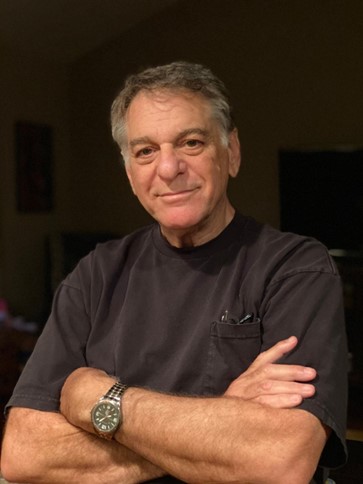
Seventy-two-year-old Mark Sudock is no stranger to life’s challenges. For more than 20 years, Mark battled with occasional transient ischemic attack – a type of mini stroke – and hereditary hypertension which he managed through medications and treatment through his primary care physican.
In 2018, Mark started feeling constant fatigue and experienced urinary incontinence (bladder control) and memory loss. He went to his local primary care physician where he was assessed through scans, MRIs, and CT scans. Based on the scans and symptoms, Mark was diagnosed with a rare cancer, Neuroendocrine Tumor (NETs), stage 4.
Some neuroendocrine tumors can grow very slowly. However, at stage four, these tumors become more aggressive, invading and destroying normal body tissue or spreading to other parts of the body. In Mark’s case, the cancer had spread throughout his liver, kidney, and abdomen.
This cancer diagnosis took a toll on his body to the point where he was not able to do the activities he loved, like taking walks often with his wife or even continuing to be a radio host. He proceeded with surgeries and other form treatments at a local hospital to rid his body of the tumors, but it was still progressing slowly.
The Beginning of Mark's Heart Issues
With the energy used to battle his cancer, hypertension, and occasional mini-strokes, it seemed his heart couldn’t take the burden anymore. On Memorial Day weekend of 2022, while grocery shopping with his eldest daughter to prepare for celebrating the long weekend and his wife’s birthday, he felt a sharp, slicing pain near his heart.
“I felt a pronounced tear, and it was extremely painful,” said Mark. “Similar to a knife pulling across my chest.”
Unaware of what this was, but knowing he had to go to the hospital, Mark alerted his daughter of his unbearable and ghastly pain, and they immediately rushed home to get any necessary belongings and have Mark lay down while they called for emergency medical services (EMS) to arrive. When the ambulance arrived, Mark had passed out a couple of times due to the pain. The emergency medical technicians (EMTs) stabilized Mark and quickly transported him to the local community hospital nearby.
Treatment for a Ruptured Aorta
When Mark arrived at his local hospital, the doctors assessed Mark, and based on the scans done and his symptoms, they diagnosed him with a ruptured ascending aorta, a tear in the curved part of the aorta extending upward from the heart. A ruptured ascending aorta is a rare and life-threatening condition that causes bleeding internally. When a patient has a ruptured ascending aorta, the chances of them surviving before they make it to the hospital are slim – around 50%. Once they are on the operating table, the chances decrease to 20%.
To treat his extreme case, Mark was transported to MemorialCare Heart & Vascular Institute at Long Beach Medical Center. The Heart & Vascular Institute is known for its advanced, minimally invasive heart and vascular procedures which help patients with severe heart conditions. With its extensive team of experts, specialized treatments, and recovery programs, patients benefit from fewer complications, less scarring, greater comfort and fast recoveries.
Mark’s life-saving team of surgeons included Ryan Chiu, M.D., cardiothoracic surgeon, MemorialCare Heart & Vascular Institute at Long Beach Medical Center, and previous medical director Jeffery Altshuler, M.D. cardiovascular surgeon, MemorialCare Heart and Vascular Institute at Saddleback Medical Center.
At the MemorialCare Heart & Vascular Institute, patients are offered personalized prevention programs led by highly skilled and supported physicians and a fully trained care team. The MemorialCare Heart & Vascular Institute offers a comprehensive valve clinic, where a multi-disciplinary team including community cardiologists, cardiac surgeons, cardiac interventionalists, cardiac imaging specialists, nurse practitioners, and fellows, meets weekly to review each patient’s clinical history along with all the tests and images necessary to determine the best course of treatment for each individual.
For this type of procedure, they performed open heart surgery to replace his torn ascending aorta with a polyester graft. This procedure took less than three hours of operating with no complications.
“We were able to save his life on his wife's birthday,” said Dr. Chiu. “She ended up telling me it was the best possible birthday gift she could have ever received.”
While the surgery was a success, it was only the beginning of Mark’s journey. While recovering in the intensive care unit at Long Beach Medical Center for a month, doctors found the blood flowing to Mark’s brain was being disrupted. Simon Rayhanabad, M.D., vascular surgeon, MemorialCare Heart & Vascular Institute at Long Beach Medical Center, performed a carotid-to-carotid bypass to increase blood flow to his brain.
Cardiac Rehabilitation After Heart Surgery
Soon after being discharged from the hospital, Mark went to Long Beach Medical Center’s Cardiac Rehabilitation program. There, Mark spent about 10 weeks going through different aerobic training exercises to regain mobility and strength. The cardiac rehabilitation program also offers counseling and educational resources about heart health and lifestyle changes.
“The care team at Long Beach Medical Center was phenomenal; everyone was so compassionate and attentive. They made me feel empowered and supported me throughout this entire journey.”
- Mark Sudock
The care team at MemorialCare Heart & Vascular Institute prides themselves in research excellence through clinical trials and novel investigations to improve the well-being and health of all patients – safeguarding the community by improving outcomes and reducing complications.
Every six months to 12 months, Dr. Chiu monitors Mark through regular CT scans and MRIs to make sure there is no leakage – Mark’s aorta is still intact post-surgery.
While Mark has not been able to resume his walks yet, the treatment has helped restore some energy and even his memory that was lost since his cancer diagnosis. He spends most of his time sitting outside and taking in the beauty in the world. Mark also does consultation for students interested in the art of storytelling.
“Despite the challenges, one has to find a reason to go on living,” said Mark. “While I am still in this moment, I want to continue to inspire people and set examples. This is something I feel like everyone should do.”
Mark encourages anyone facing serious difficulties in life to “keep your head held up high and believe you will make it through whatever comes your way.”
