Published on May 12, 2025
Carrying for one baby is amazing, but carrying for four – it’s exceedingly rare and special — but it also has its challenges. Whether a pregnancy is common or complex, ensuring new moms have the right care team is crucial, especially for pregnancy with multiples, which is considered high-risk. Santina Monreal, mother to the Monreal quadruplets, knew she needed exceptionally specialized care to ensure the best possible outcome for herself and her babies.
Managing Multiples
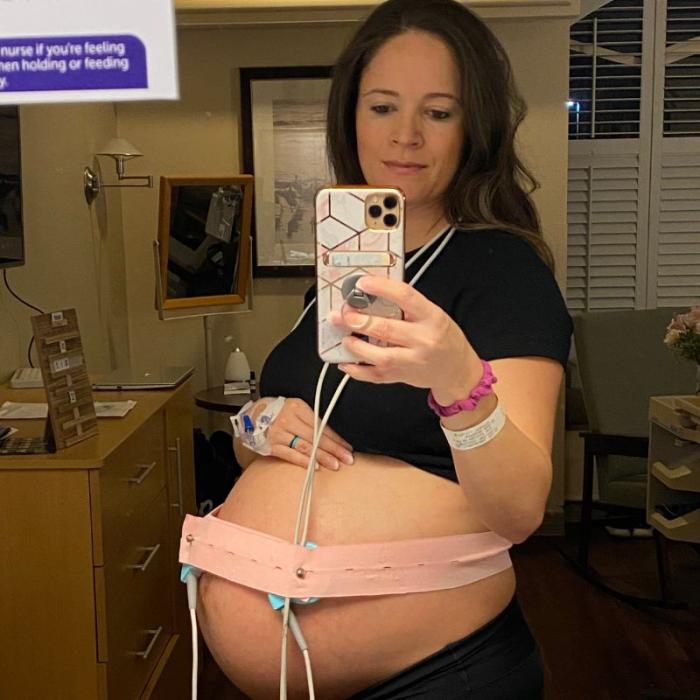
For women carrying quadruplets, the risk of complications during pregnancy significantly increases. Conditions such as preterm labor and intrauterine growth restriction (IUGR), are common in a multiple’s pregnancy, so it’s important to have close follow-up care and a team that is trained in high-risk pregnancies and are equipped to handle any adverse events that may arise.
“I knew that with this pregnancy, I was going to need close monitoring and expert care,” says Santina. “From the moment I knew I was expecting quadruplets; I placed my trust in The Women’s Hospital at MemorialCare Saddleback Medical Center. Maternal-fetal-medicine doctors and nurses all knew how to best care for me and took my decisions for my pregnancy seriously.”
Santina conceived her quadruplets through intrauterine insemination (IUI), a procedure that treats infertility by increasing the chances of pregnancy. This is done by placing specially prepared sperm directly into the uterus, the organ where a baby develops. With IUI, the sperm are inserted around the time an ovary releases one or more eggs, with the hope that the sperm and egg will unite in the fallopian tube, which connects the uterus to the ovaries. In some cases, IUI can result in a multiple pregnancy, as it did for Santina.
In Santina’s case the IUI resulted in four viable embryos that she would need to carry. In some cases, when that many embryos are viable, the mother can elect to do a fetal reduction, to improve the health and outcomes of the remaining fetuses and the pregnant woman. Santina did not want to do that, so The Women’s Hospital’s maternal-fetal medicine specialists worked closely with Santina to ensure she and her babies remained as healthy as possible throughout the pregnancy.
High-Risk Pregnancy, Meets High-Touch Experience
Saddleback Medical Center has been at the forefront of maternity care for more than 35 years, since opening the first Labor, Delivery, Recovery, Postpartum (LDRP) suites in Orange County in 1988. The care team’s commitment to best practices driven by research and outcomes, makes them understand the importance of creating a safe and comforting space for mom to deliver her babies. Focused on continuous quality improvement, Saddleback Medical Center, for eight years running has been named a Center of Excellence by the Society of Obstetric Anesthesia and Perinatology.
When Santina reached 24 weeks, the maternal fetal medicine care team informed her that hospitalization might be required as her pregnancy progressed.
“They wanted to admit me early in my pregnancy so they can monitor me and the babies more closely,” says Santina. “It wasn’t until 28 weeks, during a routine check-up that I was admitted at Saddleback Medical Center for closer monitoring as one of the baby’s had begun to have severe IUGR and blood flow restrictions. The care team did everything to care for my babies and me to ensure we remained healthy and safe throughout the pregnancy.”
Santina’s time in the LDRP suite was overwhelmingly positive, thanks to the wonderful nursing staff, including Pamela, RN, who provided ample information and support.
“I didn’t know what to expect since I was admitted into the hospital weeks before my delivery date. However it was the best experience I could’ve imagined, every question or concern I had was always addressed. I felt entirely cared for and never alone.”
- Santina
Hospitalization for high-risk pregnancies is often necessary to provide close monitoring and immediate intervention if needed from their on-site board-certified OB hospitalists to ensure any urgent related issues are treated immediately. Women who are admitted into The Women’s Hospital, like Santina, receive specialized care throughout their hospitalization, such as:
- Continuous fetal monitoring to track the heart rates, movements, and overall well-being of each baby. The advanced equipment at The Women’s Hospital ensures the highest level of precision and care for both mother and child.
- Maternal health evaluations to check for conditions such as gestational diabetes, pre-eclampsia, and signs of preterm labor. The care team of specialists provides personalized care, ensuring the health and safety of every mother throughout her pregnancy journey.
- Neonatal consultations to prepare mothers for what to expect if their baby may need to be admitted to The Women’s Hospital’s level III Irma Feldcamp Neonatal Intensive Care Unit (NICU). At Saddleback Medical Center, the NICU is equipped with the latest technology and staffed by board-certified neonatologists, pediatric subspecialists, experienced nurses, and respiratory therapists. The care team is committed to providing individualized, around-the-clock care to meet the complex needs of premature newborns.
“I felt so secure knowing that all the resources I might need were all in the same location. And in moments when I felt overwhelmed, the nurses were so kind to me and encouraging. They were constantly reassuring me that everything I was feeling was okay.”
- Santina
The Quadruplets NICU Journey
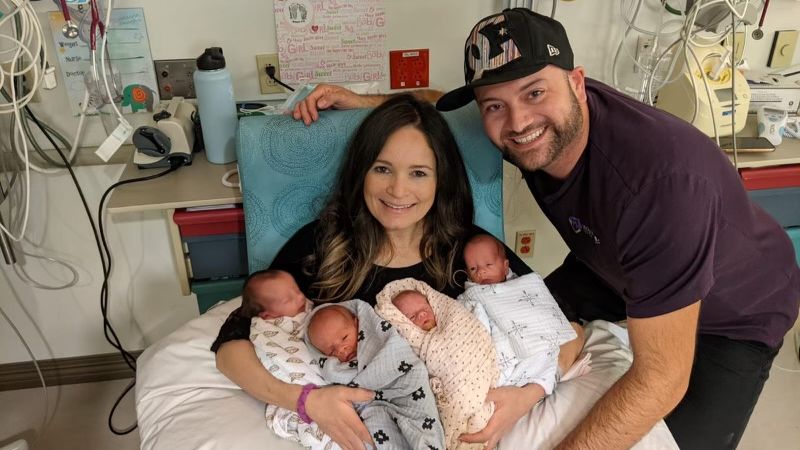 With close monitoring, when Santina reached 31 weeks, she met with a neonatologist to discuss the next steps. Since quadruplets are primarily born prematurely, the care team took every precaution to ensure a safe delivery when the time came.
“I remember the day of labor, the nurses gave me pillows making me as comfortable as I could be during my epidural,” says Santina. “They also prepared me for the shakes I was going to feel during labor.”
A highly skilled team of obstetricians, neonatologists, nurses, and other specialists worked closely to deliver her four babies. While all the babies were born without complications, they still required close monitoring due to their prematurity. The babies were then taken just down the hall from Santina to the NICU.
The Women’s Hospital offers a Level III NICU, equipped to handle complex needs of premature newborns. With board-certified neonatologists, pediatric subspecialists, experienced nurses, and respiratory therapists providing around-the-clock individualized care.
For Santina’s quadruplets – two boys, Sebastian and Aiden, and two girls, Aria, and Sevilla – the NICU played a crucial role in their early days. While all four babies progressed well, their stays varied in length. Aiden was the first to be able to go home at five weeks while the last one, Sevilla, remained in the NICU for nine weeks.
Looking Back
Santina’s journey through pregnancy, delivery, and the NICU highlights the expertise, compassion, and dedication of the team at Saddleback Medical Center. Through advanced medical care and unwavering support, the hospital ensured that both she and her quadruplets received the best possible outcome.
“Looking back at everything that we went through and seeing how much our babies have grown over the last four years, is incredible. The care that we received leading up to and even after discharge was extremely helpful. The care team provided guidance and education to us on how to care for her quadruplets, including feeding, holding, and bonding. Even the follow-up care after discharge helped us ensure the kids met critical growth and developmental milestones.”
- Santina
Today the quadruplets, Sebastian, Aiden, Aria, and Sevilla, are as rambunctious as any four-year-old can be as they tumble onto couch cushions, play on the playset in the backyard, and recently graduated from pre-school.