Published on Dec. 2, 2024
Diwali is a time of celebration for millions of people across the world. Diwali welcomes all to rejoice in the festival of lights with good food, good company, and general merriment. Diwali is often celebrated with plenty of delicious dishes and sweet treats, which can make it difficult for those with diabetes to feel fully included in the festivities.
Most traditional Diwali dishes, while beloved for their rich flavors and celebratory significance, can be tricky for those managing diabetes. Many of these foods are deep-fried, sweetened with sugars and syrups, or are made using simple carbohydrates like white rice – all of which can spike blood sugar levels. Fried sweets like poori (a deep-fried bread) and jalebi (a sugary, crispy dessert) are staple indulgences, alongside sweets like coconut burfi (a sweet coconut dessert) and kaju katli (an Indian fudge).
An integral part of Diwali tradition is sharing and gifting sweets as a gesture of goodwill, making it harder for individuals with diabetes to steer clear of sugary offerings without feeling left out of celebrations. However, there are ways to modify these classic dishes to make them more diabetes-friendly.
By using ingredients like low-fat milk, sugar substitutes, or whole grains and opting for methods like baking instead of frying, you can enjoy a healthier version of Diwali dishes that won’t disrupt blood sugar levels as drastically. These thoughtful changes allow for a balanced approach, where traditional flavors are preserved, and the holiday remains joyous and inclusive for everyone. While these traditional Diwali snacks aren’t diabetes friendly, there are ways to modify the dishes you know and love to be more healthful and to help keep your blood-sugar levels in check.
In making these adjustments, people with diabetes can continue to celebrate fully while maintaining their health goals, especially with guidance from dieticians and programs like MemorialCare’s ACTIVE Diabetes Program, which supports balanced eating and diabetes management during holiday seasons.
Asian Indians in the United States experience a notably higher prevalence of diabetes compared to other ethnic groups. Data from the American Diabetes Association indicates that 10.8% of Asian Indian adults have diagnosed diabetes, which is higher than the rates for Chinese, Japanese, Korean, and Vietnamese adults, whose prevalences range from 6.1% to 7.1%. This increased risk is due partly to cultural dietary habits—often high in refined carbohydrates and unhealthy fats. This elevated prevalence underscores the importance of culturally tailored healthcare interventions and lifestyle modifications to effectively manage and reduce the risk of diabetes within the Asian Indian community.
ACTIVE Diabetes Program Connects Patients, Culture, & Best Practices
As a registered dietician with MemorialCare’s ACTIVE Diabetes Program, I’m passionate about helping patients take control of their diabetes, especially during special times like Diwali when family, food and tradition all come together. The program, offered at MemorialCare Long Beach Medical Center, Orange Coast Medical Center (Health and Wellness Pavilion), and MemorialCare Medical Group – Irvine (Barranca) is designed to support patients on this journey. We coordinate care between providers and empower patients to take control of their diabetes by making healthful choices, especially during the holidays. For anyone with a MemorialCare primary care physician, a referral to the ACTIVE Diabetes Program is easy to obtain, and we offer telehealth options to make it accessible across locations.
Diabetic-Friendly Diwali Recipes
I encourage everyone to keep in mind that, even with modified recipes that are more diabetes-friendly, sweets and indulgent snacks should still be enjoyed in moderation. So, while you savor your favorite dishes this Diwali, remember to monitor your blood sugar and make choices that prioritize your well-being.
We are always here to help you and want to support you on your wellness journey. Below are some diabetic-friendly Diwali recipes that keep the festive and cultural flavor and spirit, while ensuring our health goals can also be maintained.
Apple Rabdi

One classic dessert is rabdi—a creamy, rich treat made by slowly simmering milk until it thickens and is flavored with warm spices like cardamom and nutmeg. Traditionally, rabdi is indulgent and high in sugar and fat, which can quickly spike both cholesterol and blood sugar levels.
While rabdi is traditionally high in sugar and fat, which can spike cholesterol and blood-sugar levels, this lighter version of rabdi keeps the warm, comforting flavors while using low-fat milk and a sugar substitute. Plus, the addition of grated apple adds natural sweetness, fiber, and a little extra texture. It’s a diabetes-friendly take that lets you enjoy the taste of this beloved dessert without as much impact on blood sugar. Here is how to make it:
Ingredients
- 3 cups low-fat milk3/4 cup grated apples (with skin)1/4 tsp cardamom (elaichi) powder
- a pinch of nutmeg (jaiphal) powder
- 1 tsp sugar substitute, such as stevia
Instructions
- Bring the low-fat milk to a boil in a non-stick pan and let it simmer for 10-12 minutes, stirring occasionally and scraping the sides of the pan.
- Add the grated apple, mix well and simmer for another 2-3 minutes, stirring the mixture and scarping the sides of the pan.
- Add the cardamom and nutmeg powder, mix well and set aside to cool.
- Once the rabdi is cool, add the sugar substitute, mix well and refrigerate for at least 1 hour.
- Serve chilled.
Malai Peda
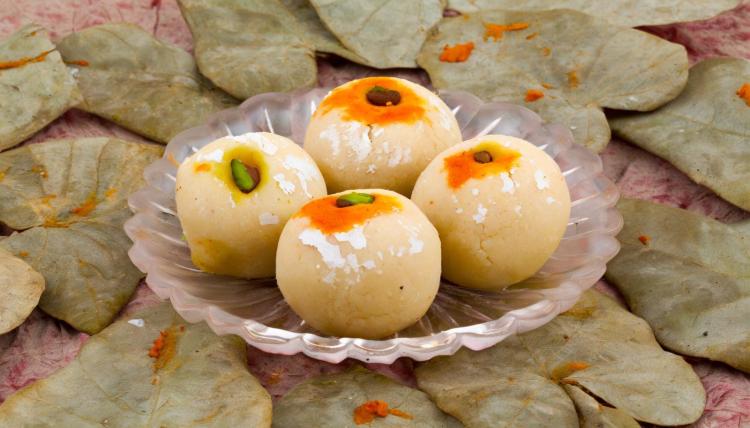
Here is how I approach a diabetes-friendly take on Malai Peda – traditional Indian sweet made with milk, sugar, and spices like saffron and cardamom. Normally, this treat is made with full-fat milk and sugar, giving it a rich texture but also making it high in sugar and fat, which can affect blood-sugar levels. In this version, I’ve substituted half the milk for a low-fat option and used a sugar substitute to cut down on the carbs and calories without sacrificing flavor. These changes make the dish more diabetes friendly, but it is still important to consume this dessert in moderation. Here is the recipe:
Ingredients
- 2 cups full-fat milk
- 2 1/2 cups low-fat milk, 99.7% fat free
- 2 tsp cornflower
- 1 Tbs low-fat milk, 99.7% fat free
- 1/4 tsp saffron (kesar) strands
- 2 tsp warm milk
- 1/4 tsp citric acid (nimbu ka phool)
- 1/4 tsp cardamom (elaichi) powder
- 1 1/4 tsp sugar substitute, such as stevia
Instructions
- Mix cornflower and 1 Tbs of low-fat milk in a bowl and set aside.
- Mix saffron and 2 tsp of warm milk in a bow and set aside.
- Combine the citric acid and 1 Tbs of water in a bowl and set aside.
- Combine the full-fat milk and low-fat milk in a deep pan, and boil on high for 6-8 minutes, stirring occasionally.
- Reduce the heat to medium and simmer for 25-30 minutes, or until the milk is reduced by half, stirring occasionally and scraping the sides of the pan.
- Add the saffron-milk mixture, mix well and cook on medium for 4-5 minutes, stirring occasionally.
- Add the cornflower-milk mixture and citric acid-water mixture, mix well and cook on medium for around 12 minutes, or until the mixture leaves the sides of the pan. Stir continuously.
- Transfer the mixture to a plate and flatten with a roller or spatula. Set it aside to cool for 30 minutes.
- Add the cardamom and sugar substitute and mix well using your hands.
- Divide the mixture into 20 equal portions and shape each portion into flat rounds using your hands.
- Keep refrigerated in an air-tight container until ready to serve.
Gajar Ka Halwa

Gajar Ka Halwa is one of my favorite ways to enjoy the natural sweetness and nutrition of carrots, and it's a beloved dessert across India. This carrot pudding is packed with fiber, plus vitamins A and C, which are great for eye health, skin, and even supporting the immune system. To make it a little more diabetes-friendly, I swap out full-fat milk for low-fat milk, which helps lower the sugar and fat content. I also love adding almonds and pistachios, which give it a satisfying texture boost and add a dose of healthy fats. It's a delicious, balanced way to enjoy a classic dessert! Here is what you need:
Ingredients
- 1 lb. carrots
- 2 cups low-fat milk
- 1 Tbs ghee
- 2 Tbs stevia
- 1/4 tsp cardamom
- 1 pinch of saffron
- 5 almonds
- 5 cashews
- 10 pistachios
Instructions
- Wash, peel, and grate the carrots. You can use a food processor to make this process go faster.
- On low heat, roast 10 pistachios, 5 almonds, and 5 cashews until crunchy. Remove from heat to a cutting board and chop them.
- Add the milk to the same pan and bring to a low boil.
- Add in the grated carrots and simmer on medium heat, stirring to prevent burning on the bottom.
- Cook until the milk completely evaporates, being careful not to let the bottom burn.
- Add the sugar substitute and stir. The mixture will turn gooey again.
- When the moisture is half evaporated, add 1 Tbs of ghee and stir.
- Once the mixture is thick again, add in the cardamom and remove from heat.
- Garnish the dish with the roasted nuts. Serve chilled or warm.
While blood-glucose levels may not recognize holidays, you can still satisfy your sweet tooth with these Diwali recipes. As with everything, enjoy in moderation and continue to monitor your blood-glucose levels to ensure you can have the best of both worlds.
