Published on Dec. 2, 2025
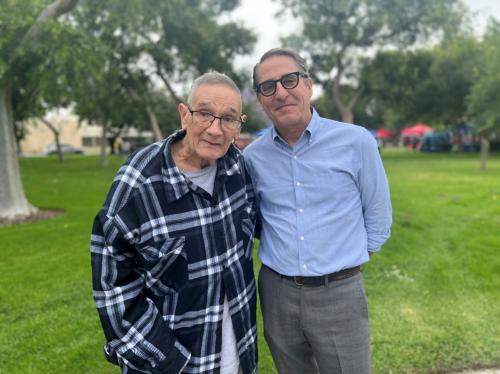
John Zaragoza has been through many challenges in his life, but nothing could have prepared him for what occurred in October 2023.
During a regular eye check-up at with his optometrist, John felt a sharp, stabbing pain in the middle of his chest and was unable to breathe. He immediately passed out and was laid on the ground by the optometrist. Unconscious and unaware of what was going on, John was experiencing a cardiac arrest.
Expert Emergency Care Restores Hope for Cardiac Arrest Survivor
Luckily, his nephew, Larry Zaragoza, was there to immediately perform hands-only CPR on John until the paramedics arrived. Larry was able to get John’s pulse back and saw John’s stomach slowly rising with air – John was alive but barely holding on. Within five minutes, the EMTs arrived and rushed John to the emergency department at MemorialCare Long Beach Medical Center.
Upon arrival, the skilled team quickly assesses and treats patients using advanced technology and proven protocols. Their expertise in STEMI cases is highlighted by exceptional “Door to Balloon/Device Time,” ensuring rapid restoration of blood flow and better outcomes. Renowned for its excellence, the department offers hope and a second chance to those experiencing cardiac emergencies.
Advanced Cardiac Imaging Guides Life-Saving Treatment
When the care team assessed him, John had a lack of blood flow from the heart to the brain and other organs, which can cause brain damage or death if not treated immediately. They quickly transferred John to the MemorialCare Heart & Vascular Institute at MemorialCare Long Beach Medical Center’s cardiac catheterization (Cath) laboratory.
MemorialCare Heart & Vascular Institute at MemorialCare Long Beach Medical Center utilizes advanced cardiac imaging technologies that enable precise visualization of the heart’s arteries and chambers from multiple perspectives. These state-of-the-art imaging systems provide cardiologists with detailed information, allowing for more accurate diagnoses and safer, more efficient procedures. By leveraging these capabilities, the institute can tailor treatments to each patient’s unique needs and minimize procedural risks, ensuring the highest standard of cardiac care.
The digital imaging system in the cardiovascular catheterization lab is a specialized X-ray exam used to look inside the arteries and chambers of the heart in adults, infants and children from multiple perspectives. This advanced technology gives cardiologists the optimum amount of information, enabling procedures to be performed more efficiently and with less risk for patients.
Dr. Shavelle Leads John’s Complex Procedure in the Cardiac Catheterization Lab
Upon arrival, Dr. David Shavelle, the Cath lab team, and the Extracorporeal cardiopulmonary resuscitation (ECPR) team approached John’s procedure meticulously because he was critically ill and an older patient. To stabilize the blood pressure, John was placed on extra-corporeal membrane oxygenation (ECMO) on arrival to the Emergency Department. He was then taken emergently to the cardiac catheterization laboratory for emergent angiography.
To help restore John’s blood flow, Dr. Shavelle performed a coronary stent placement to improve flow to the left anterior descending artery.
For a coronary stent procedure, Dr. Shavelle and his team inserted a tiny, expandable metal mesh coil in the newly opened area of the artery to prevent it from closing again. This helps blood flow return to normal to prevent more serious heart issues from happening.
“A coronary stent procedure is vital for some cardiac patients,” said Dr. Shavelle. “Not only does it allow the blood to flow properly in your heart, but it also improves recurring chest pain and shortness of breath.”
To ensure John’s stability following hospital presentation, he was continued on ECMO. ECMO is a device that is similar to the ‘heart-lung machine’. The ECMO machine is a type of bypass pump that moves oxygen and carbon dioxide throughout the body, allowing for the heart and lungs to rest. During ECMO treatment, blood flows out of the body through a tube in a large blood vessel in the groin. The pump pushes blood through the tube that carries it to the ECMO machine, which adds oxygen and removes carbon dioxide. It then pumps the blood back into your body.
At MemorialCare Heart & Vascular Institute, the ability to deliver ECMO demonstrates its capability to manage the most complex cases, which often require transfer to an academic institute. MemorialCare Heart & Vascular Institute’s capability of integrating ECMO into its robust cardiovascular programs ensures that patients receive the highest level of care locally, reducing the risks associated with transferring critically ill patients and providing continuity of care within a familiar setting.
“This distinction of integrating ECMO into our Heart & Vascular institute lies not only in our level of care we provide. But also, in our focus on innovation, patient outcomes and accessibility.”
- Dr. Shavelle
John’s Road to Recovery: Compassionate Care and Family Support After Surgery
After his procedure, John was hospitalized for two weeks at the coronary care unit (CCU), a specialized unit within the intensive care unit (ICU) focusing on heart-related conditions at MemorialCare Heart & Vascular Institute. After his hospitalization in the CCU, he was transferred to the ICU where he spent a week recovering.
During his recovery in the hospital, John was surrounded by his family, where their concerns were addressed by Dr. Shavelle and other staff. They listened to the family and made sure every question they had was answered, and every doubt or fear was acknowledged.
“I do not remember much of my experience at Long Beach Medical Center, but I do remember the compassionate nurses and staff that took care of me. One nurse prayed with me; an act important to me because my faith in God is a big part of my life.”
- John
John’s journey of improvement did not end after being discharged from the hospital. Per Dr. Shavelle’s advice, John changed his lifestyle by incorporating a healthy diet and exercising regularly, resulting in healthy weight gain from 120 pounds to 160 pounds. This transition was not easy, but with the support of the medical staff and his family, John made remarkable progress.
“I am so grateful for Dr. Shavelle and the entire staff for saving my uncle’s life," said Larry. "They updated us regularly about his progress and reassured us during the entire time. Their excellent care helped keep him with us for a bit longer.”
For decades, the MemorialCare Heart & Vascular Institute has been a pioneer in the development and advancement of heart-related treatments and cardiac rehabilitation with leading-edge research, equipped to handle life-threatening heart conditions. With array of passionate and renowned specialists, patients like John are provided with the highest quality care and comfort during their hospitalization. The MemorialCare Heart & Vascular is an award-winning institute, nationally recognized for its advanced, minimally invasive heart & vascular procedures and personalized treatment plans, providing patients the highest quality care in heart failure, stroke care, and diabetes.
Today, John is doing much better than before, continuing his new lifestyle of a healthy diet and exercising, both of which have significantly improved his health. The exceptional care he received from MemorialCare Heart & Vascular Institute and his commitment to a healthier lifestyle has provided him with a new lease on life.
