BE FAST: Know the Warning Signs of Stroke
MemorialCare Health System Excellence in Healthcare Presents Weekly Dose of Wellness. Here's your host, Deborah Howell.
Deborah Howell (Host): Hello and welcome to the show. I'm Deborah Howell, and today's topic is how to BE FAST and know the warning signs of stroke. We have two special guests from MemorialCare Saddleback Medical Center to help us through it. First, Dr. Karen Forhane, an acute care nurse practitioner and manager of the Neuroscience Institute and ICU Nurse Practitioner Program, and Jana Swauger, registered nurse and stroke program coordinator. Welcome to you both.
Karen Forhane, DNP: Thank you, Deborah.
Jana Swauger, RN: Thank you.
Deborah Howell (Host): Dr. Forhane, let's start with you. What are the most common signs of stroke and what does BE FAST stand for?
Karen Forhane, DNP: Well, I like to remember the most common signs and symptoms of stroke with the acronym BE FAST. So B stands for balance. You ask the person, have you had a sudden loss in balance or coordination or are you feeling any numbness? The E is for eyes. Is the person having a sudden change in vision or trouble seeing? The F is for face. Does one side of the face droop when the person smiles? Or is it not equal on both sides? A is for arm. And that is you see if the patient is able to see to raise both arms or if there's an arm drift when they do raise their arms. The S is for speech. Is there any slurred or strange speech or confusion present? And T is for time. You definitely want to call 911 immediately if you observe any of those signs and symptoms.
Deborah Howell (Host): And are the signs the same for men and women?
Karen Forhane, DNP: Well, generally, men and women do experience the same symptoms for stroke. However, women sometimes have additional symptoms. like generalized weakness, trouble breathing, fainting, seizures, nausea, or even vomiting.
Deborah Howell (Host): Got it. Now to you, Jana. Who is at risk for stroke?
Jana Swauger, RN: Well, to be honest, generally anyone can be at risk of stroke. The goals of focusing our Stroke Prevention and Awareness Campaign is for people to understand their risk factors. So our risk factors are really what put us personally at risk for stroke. There are two different types of risk factors. We have risk factors that we cannot control, and those are things like our age, our family history, our race, our gender, and any prior histories of stroke. Then there's other things, and this is where we really zero in with prevention and awareness, is our controllable risk factors. So things such as high blood pressure, high cholesterol, diabetes, smoking, physical inactivity, obesity, heart disease, and if we have atrial fibrillation that we're anticoagulated, so these are the things that put anybody at risk for stroke.
Deborah Howell (Host): Got it. And what's the difference between ischemic strokes and hemorrhagic strokes?
Jana Swauger, RN: Well, in essence, a stroke occurs, the definition, a stroke occurs when blood flow and oxygen to the brain are interrupted. So there are two ways that we can experience a stroke in that manner. And ischemic is the first type, it is the most common. 85% of all strokes are of the ischemic variety. That can be as a result of a thrombosis, which is a blood clot that forms within the vessel wall, the arterial wall itself, or it can come from a cerebral embolism from someplace else in the body, more usually the heart. The hemorrhagic stroke is really a rupture in a cerebral artery. And that is generally caused by hypertension, 85% of the time it's caused by hypertension, and it is just a temporary rupture of the vessel due to high pressure, and then what we have now is blood sitting in the brain itself. So those are the two types. Then TIA really is, there's no radiographic evidence of a stroke, so we don't throw it into the stroke category, but the symptoms are exactly the same.
Deborah Howell (Host): Perfect. Dr. Forhane, what should you do if you suspect you or someone else is having a stroke?
Karen Forhane, DNP: Definitely call 911. The paramedics will take you to a hospital that's specialized in taking care of strokes because not all hospitals have all the treatments available to treat a stroke. The timing is really, really important with a stroke because the quicker you get treatment, potentially the less deficits you will have. And that's the biggest fear from stroke is all those deficits that can occur after the stroke. We have about three hours, in some cases up to four and a half hours for eligible patients, to treat an ischemic stroke with a clot-busting medication called Alteplase or TPA. It's known by both names. And we can only infuse that, again, within the three hours. So that is what, you know, it's really important to know when the last time the person was known well so that we could get that treatment to them immediately.
Deborah Howell (Host): You spoke a little bit about deficits. Can you get into that a little bit more?
Karen Forhane, DNP: So some of the deficits that occur after a stroke are, you know, difficulty with speech, mobility issues, as well walking, being able to use, because strokes affect one side of the body, the mobility in one side of the body, being able to use the right side or the left side of the body, the hearing deficits, writing deficits. So it's really important to get to a hospital, you know, call 911 so that they can get you to a hospital so that we can give you some of those medications or even do a procedure called a thrombectomy, which is a clot retrieval procedure that can help take that clot out.
Deborah Howell (Host): And Dr. Forhane, what is the very fastest way to receive treatment for stroke?
Karen Forhane, DNP: Call 911. The paramedics are highly trained in obtaining a history and very valuable information for when you arrive to the hospital. And so the quicker we have that information, the quicker we can get you treatment.
Deborah Howell (Host): So don't mess around trying to get a hold of your primary care physician just 911 every time, right?
Karen Forhane, DNP: 911 every time and they'll bring you straight to a stroke receiving facility and we'll get you taken care of.
Deborah Howell (Host): Sounds great. Jana, this one's for you. How is Saddleback Medical Center prepared to handle stroke patients?
Jana Swauger, RN: Well, thanks for asking that question. I've been with the program really from the beginning of its evolution and our journey of becoming a Stroke Center of Excellence started about 10 years ago, 11 years ago now. It was the end of May 2009 where Saddleback became a designated Stroke Receiving Center which was granted to us by the Orange County Emergency Medical System. During this 10-year-long journey, we have achieved joint commission certification for an advanced stroke center. So we began as a primary stroke center. We are now an advanced thrombectomy-capable stroke center, and we offer 24-7 emergency neurology, neurointervention, neurosurgical radiology, and endovascular and critical care services. And that is part of what we have to do as a stroke center. We have to meet very stringent criteria to keep these certifications, both with the county and with the Joint Commission. In order to do so, we have to provide a designated full-time stroke program coordinator. That's me. I have some oversight over the program. I'm there for the patients. I round on the patients. I do follow-up with the patients and oversee the data. the outcomes that we have to provide. We also have notification systems in place that alert the stroke team and our emergency physicians as a one call alert, so that we are all waiting at the back of the emergency room for that patient to come in. We also offer teleneurology services. So, we are able to get an expert consultation in a very short amount of time, about 15 minutes from a patient arriving. We can do that. We also have multimodal imaging, so a variety of CAT scans. CT angiograms, CT perfusions, and we've just implemented something called RAPID. So these images now are pushed by email or to the cell phone of our physicians on call. So this significantly reduces the amount of time that it takes for them to see images for a potential patient. All of our emergency room physicians, nurses, ICU nurses, and our stroke unit nurses have eight hours a year of stroke-specific training that's mandatory for them for us to maintain our certifications. We also have a multidisciplinary team, and that team is involved in the care of all our strokes. And so not just the medical team, we're talking physical therapists, speech therapists, occupational therapists. Not to mention our registered dieticians, our pharmacists, social workers, and case managers. So everybody together builds this program. We have the expansion of our new ICU nurse practitioner program, which Dr. Forhane has been putting together to provide us 24-7 coverage in our critical care area. They also will provide an additional layer of oversight to the program. And we are just about ready to launch our continuous EEG program. So that allows us to diagnose and treat patients that are in what we call a continuous state of epileptic seizure program. So we're really looking forward to that. And then we also really provide the community with resources. So our stroke prevention and awareness campaigns, and we also have a stroke support group that meets every month. We are on hiatus right now because of the COVID crisis, but we are anticipating resuming next month by a teleconferencing process. And I think that is it.
Deborah Howell (Host): Well, that's quite enough and should give everybody in the OC great peace of mind, especially our seniors. Final question for you, Jana. How can patients learn more about stroke prevention and management?
Jana Swauger, RN: Well, listeners can visit specifically the MemorialCare website at memorialcare.org/sbstroke. And that's what Saddleback has to offer. There's also additional resources out in the community from the American Heart, American Stroke Association website and the National Stroke Association website.
Deborah Howell (Host): Perfect. And thank you so much, Dr. Forhane and Nurse Jana Swauger, for being on our show today. It's been wonderful talking to both of you.
Jana Swauger, RN: Thank you.
Karen Forhane, DNP: Likewise. Thank you for having us on.
Deborah Howell (Host): My pleasure. To listen to the podcast or for more info, visit memorialcare.org. That's memorialcare.org. I'm Deborah Howell. Thanks for listening and have yourself a fantastic day.
Published on June 1, 2020
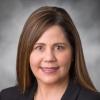 Karen Forhane, DNP, RN, ACNPC-AG, FNP-C, CCRN
Acute Care Nurse Practitioner, Manager of the Neuroscience Institute and ICU Nurse Practitioner program
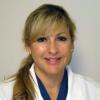
Jana Swauger, BSN, RN, SCRN
Stroke Program Coordinator
Tags